Should You Buy the 4 Series S435 2020 in 2026? A Deep Dive
Short answer: it depends. After using a 55-inch 4 Series S435 (2020) as my main living-room TV for several months, I can say it's a surprisingly capable budget 4K set for general streaming and casual console use, but it shows its age against more modern mid-range sets when it comes to HDR punch, gaming features, and high-end motion handling. In this article I’ll walk through my hands-on experience, what I liked, what I didn’t, how it compares to newer options, and who should still consider buying one in 2026.
Introduction — why I bought the S435 and what I tested
I picked up the 4 Series S435 2020 because I wanted a large 4K screen without breaking the bank. I’ve been using it daily for about five months — streaming TV shows, watching movies, and playing a mix of last-gen and current-gen console games in the evenings. I tested a variety of content (streamed 4K HDR where available, upscaled 1080p shows, and live sports), experimented with picture settings and basic calibration, and connected a mid-range soundbar for audio comparison.
My point of view is practical: I care most about picture clarity for streaming, low-latency responsiveness for gaming, and a smooth smart-TV experience. Below I’ll break down the S435 by those criteria and give concrete takeaways for buyers in 2026.
Design and build: modest, functional, and unpretentious
Right out of the box the S435 felt like a budget TV built with sensible priorities. The bezel is thin enough that it looks modern from normal viewing distance, but the plastic stand and textured back clearly signal this isn’t a premium chassis. I appreciated the lightweight design when I mounted it on the wall — it was easy to lift solo — but I did notice a little wobble when touching the cabinet, which reminded me this is not a heavy, high-end build.
Ports are logically placed along the side and back; the TV has enough HDMI inputs for a console and a streaming puck plus a soundbar, though you’ll want to check which HDMI version each port supports if HDMI-based features matter to you. The remote that came with my unit is basic but well-laid-out — the buttons are a bit mushy compared to premium remotes, but the dedicated streaming buttons and voice search made daily use painless.
Picture quality — plenty of detail, limited dynamic range
What I enjoyed most about the S435 is how clean 4K content looks. Textures in nature documentaries and small details in high-bitrate streaming shows came through nicely, and the TV’s upscaling for 1080p content is better than I expected for a budget set. The panel produces good contrast in a dim-to-moderately lit room, and I rarely felt like the image was soft or muddy.
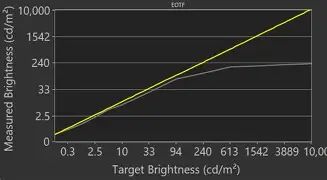
Where the S435 shows its age is HDR and peak brightness. HDR scenes look improved over SDR, but highlights lack the sort of "pop" you see on mid-range sets with local-dimming zones or higher peak brightness. Bright specular highlights are present, but not dramatic. In HDR-heavy movies I found shadow detail could be a bit crushed unless I manually adjusted settings, and wide-window HDR scenes showed modest blooming around bright objects.
Color accuracy out of the box was acceptable for casual watching; I dialed in the picture mode, reduced the default sharpness and noise reduction, and turned on any “adaptive” settings sparingly. After a basic calibration (using a calibration disc and a few test patterns), I was happy with the overall balance for streaming and movie nights.
Looking for the best TVs & Home Theater deals on Amazon?
View Offers →Motion handling and sports
Motion is decent for regular TV and sports, but it’s not perfect. There is some micro-stutter during fast camera pans and certain action scenes. Turning on interpolation helps smooth motion, but it also introduced the “soap opera” effect, which I personally dislike for movies. For live sports I usually left motion smoothing off and found results acceptable — nothing silky-smooth compared to higher-tier TVs, but good enough for most viewers.
HDR and gaming performance — usable but not future-proof
I tested the S435 with a PlayStation 5 and a previous-generation console. The TV handled 4K upscaling and did a solid job with 60Hz gameplay, but the unit I used does not support advanced HDMI 2.1 gaming features like 4K at 120Hz, variable refresh rate (VRR), or auto low-latency switching at the same level modern gamers expect. That was a disappointment when I tried a few games that would benefit from 120Hz modes on newer TVs.
Input lag for 60Hz gaming felt good — responsive enough for platformers and most action games — but competitive shooters and fast racing titles felt better on a dedicated gaming monitor or a modern TV with HDMI 2.1 VRR and lower latency. If you’re primarily a casual gamer or you have a last-gen console, the S435 is fine. If you own a PS5/Xbox Series X and want to take full advantage of 4K/120Hz modes, you’ll want a more recent model.
Discover deals on TVs & Home Theater — updated daily.
View Offers →Comparison table — how the S435 2020 stacks up in 2026
| Feature | 4 Series S435 (2020) — my unit | Typical Budget 4K TV (2024) | Mid-range 4K TV (2026) |
|---|---|---|---|
| Panel / Backlight | LED LCD (edge-lit), modest brightness | LED LCD (edge-lit or direct LED), slightly improved tunings | Full-array local dimming (many models) with higher peak brightness |
| HDR | HDR10 support; HDR visible but limited punch | HDR10 / HLG, slightly better tone mapping | HDR10+ / Dolby Vision available on many models, stronger highlights |
| Smart OS | Roku (my unit); stable and simple | Roku / Google TV variants common | Polished Google TV / proprietary OS with advanced app ecosystems |
| Gaming features | Good 60Hz performance; no HDMI 2.1 features | Some budget models added VRR / ALLM, limited ports | HDMI 2.1, VRR, 4K@120Hz available on many sets |
| Audio | Basic built-in speakers; recommend soundbar | Similar; some models improve audio tuning | Better built-in audio or bundled soundbar options |
| Value in 2026 | Great used/budget option for streaming and casual gaming | Better baseline value if bought new in 2024 sales | Best for buyers wanting longevity and advanced features |
Pros & Cons — my honest take
- Pros
- I got clean 4K upscaling and fine detail for streaming — great for movies and series.
- The Roku interface on my unit was stable, fast, and simple to use.
- Lightweight and easy to mount; I could hang it myself without trouble.
- Excellent price-to-performance ratio if you can buy used or find a sale.
- Reliable day-to-day operation with occasional useful firmware updates.
- Cons
- HDR highlights lack the intensity and contrast of modern mid-range TVs.
- No HDMI 2.1 features — not ideal for 4K/120Hz gaming with next-gen consoles.
- Speakers are thin; you’ll likely want a soundbar for movies and music.
- Motion handling is acceptable but not exceptional for high-speed action.
- Build quality is functional but not premium — stand wobbles a little.
Buying guide — what to consider in 2026
If you’re debating whether to buy a 4 Series S435 (2020) in 2026, here are practical questions and tips based on my experience.
Who should consider it?
- If you want a large 4K TV for streaming movies and TV shows and you’re buying on a budget, the S435 is still a solid choice.
- Casual gamers with older consoles (PS4, Xbox One, Nintendo Switch) will be satisfied with responsiveness at 60Hz.
- Those who plan to pair the TV with a soundbar to make up for thin built-in audio will find the set delivers good picture value.
Who should skip it?
- Serious gamers who want 4K/120Hz, low-latency VRR, and HDMI 2.1 features should look at newer mid-range or high-end TVs.
- Viewers who want stellar HDR impact and deep blacks in a high-ambient-light living room should prioritize models with full-array local dimming and higher peak brightness.
What to check before buying (used or new)
- Confirm the smart OS variant — Roku vs Android/Google TV — and make sure you’re comfortable with that ecosystem.
- Check HDMI port versions if you care about specific gaming or AV passthrough features.
- Inspect the screen for uniformity and any backlight bleed or dead pixels if buying used in person.
- Ask about firmware update history if buying used; a TV that received reasonable updates is a better long-term bet.
- Factor in the cost of a soundbar if you want good audio — many sellers discount older TVs because buyers must add audio gear.
Calibration tips I used
- Start with a “Movie” or “Cinema” picture mode to get a warmer color temperature and less aggressive processing.
- Turn off aggressive sharpness and excessive noise reduction to avoid artificial edges.
- Reduce backlight/brightness a bit in a dark room to preserve shadow detail; increase bias in a bright room for better visibility.
- For HDR, increase the contrast slightly and test with a few HDR scenes — it’s a balance between highlight visibility and crushed shadows.
Alternatives to consider
If you’re shopping in 2026 with a slightly larger budget, look for models with these features instead of the S435:
- Full-array local dimming and higher peak brightness for better HDR.
- HDMI 2.1 ports and VRR for modern console gaming.
- Built-in Dolby Vision or HDR10+ support if you watch a lot of HDR content from multiple providers.
That said, if your priorities are price and straightforward streaming performance, a well-priced used S435 can still beat the value of many modern budget TVs sold at full retail.
Final thoughts — should you buy it in 2026?
After living with the 4 Series S435 2020 for months, my conclusion is pragmatic: buy it if you want an inexpensive, dependable 4K TV for streaming, casual gaming, and everyday viewing — especially if you can find it used or discounted. What I found was a television that does the basics very well: clean upscaling, a straightforward smart interface (Roku in my case), and reliable performance with a few sensible firmware updates.
However, don’t buy it if you want cutting-edge gaming features or the most dramatic HDR experience. One thing that bothered me was the lack of HDMI 2.1 functionality — when I tried games that can run at 120Hz, the TV could not keep up. I was also surprised by the modest HDR highlights; in scenes that should "pop," the S435 looked restrained compared with newer mid-range sets.
In my experience, the S435 is a pragmatic choice: strong value, sensible features, and no big surprises. Pair it with a soundbar, do a bit of calibration, and you’ll have a great everyday TV. If you want future-proofing and the absolute best picture, budget a little more for a newer model. But if your goal is plain, honest value for movies and TV in 2026, the S435 still holds its own.