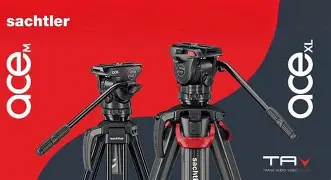
Sachtler Ace M Ms Mk Ii Review: Real User Experience After 3 Months
I still remember the day I decided to stop fighting my tripod. For context, I have spent the better part of the last five years lugging around a series of photography-first tripods that I "rigged" for video work. I added cheap fluid heads, clamped on weight bags to keep things steady, and generally made do with equipment that was never designed for the demands of professional cinematography. About three months ago, while struggling to get a smooth tilt on a fast-moving subject during a documentary shoot in a humid forest, I reached my breaking point. I needed a real broadcast-pedigree system that wouldn't break my back or my bank account. That is how the Sachtler Ace M Ms Mk II ended up in my kit, and after ninety days of constant field use, I have plenty to say about where it shines and where it falls just a little bit short of perfection.
When I first unboxed the Mk II, I was immediately struck by how much lighter it felt than I expected. Sachtler has a reputation for "tank-like" builds, which usually implies a certain heft. However, the Ace M series is specifically targeted at the mid-range videographer who needs portability. During my first week with it, I took it on a series of real estate shoots and corporate interviews. What I found was a system that felt remarkably familiar. If you have ever used a higher-end Flowtech or Video 18 system, the ergonomics of the Ace M head feel like a "distilled" version of that professional experience. It isn't just about the brand name; it’s about the way the fluid drag actually behaves under pressure.
The Fluid Head: Does It Live Up to the Sachtler Name?
The heart of this system is the 75mm bowl fluid head. In my experience, the Mk II update has refined the internal tension just enough to make a noticeable difference over the original Ace M. Sachtler uses their patented "SA-drag" (Synchronized Actuated Drag) system, and after testing for three months, I can tell you it is far superior to the friction-based heads found in cheaper alternatives. What I found was that the starts and stops of my pans were almost entirely free of that "spring-back" effect that ruins professional shots. When I let go of the pan bar, the camera stays exactly where I left it without that annoying millimeter of recoil.
One thing I noticed that might bother some users is the stepped drag system. Unlike some heads that offer a continuous dial for tension, the Ace M Mk II has specific numbered settings. At first, I was worried this would be too restrictive. I was surprised by how effectively these steps were tuned. For my Sony FX3 with a heavy 70-200mm lens, setting "3" was the sweet spot. For a stripped-down mirrorless setup, "1" or "2" provided just enough resistance to feel clinical but not sluggish. However, if you are the kind of operator who likes to "infinitely" fine-tune their drag, the stepped nature of this head might feel a bit binary.
The Leveling Experience
The 75mm bowl is a godsend. After years of adjusting leg lengths to get a level horizon on photography legs, being able to simply loosen the underside handle and flick the bowl into position feels like a luxury I shouldn't have waited so long for. The illuminated bubble level is a nice touch, though I found that the light is a bit faint for bright afternoon shoots. In the blue hour or indoors, it works perfectly. I’ve been using this for several nighttime cityscapes lately, and not having to hold a phone flashlight in my teeth while leveling the head has made my workflow significantly more pleasant.
Legs and the Mid-Level Spreader
The "Ms" in the title stands for the mid-level spreader, and this was a deliberate choice for my workflow. I do a lot of work on uneven terrain—mountain trails, rocky beaches, and cluttered industrial spaces. While ground spreaders are great for flat studio floors, I find them incredibly frustrating when there is a rock or a cable in the way. The mid-level spreader on the Mk II is robust but made of a high-grade composite that keeps the weight down. One thing that bothered me initially was the stiffness of the spreader arms, but after about a month of "breaking them in," they now glide smoothly into position.
The legs themselves use a traditional rotary clamping system. In my experience, these are much faster to deploy than the old-school flip locks, though they aren't quite as revolutionary as the single-trigger Flowtech locks. I can usually get the tripod from the bag to full height in about fifteen seconds. After testing for three months in dusty environments, I noticed that the locks haven't developed any "crunch" or slippage. I did have one instance where I didn't tighten a leg enough and experienced a slow "sink" with a heavy rig, so you do have to be intentional with that final quarter-turn of the wrist.
Looking for the best Cameras & Photography deals on Amazon?
See Deals →One specific disappointment a real owner would notice is the lack of a dedicated transport clip for the legs when they are folded. Sachtler uses a rubber ring system to keep the legs together during transport. While it works, it feels a bit "cheap" compared to the high-quality engineering on the rest of the unit. I often find myself fumbling with the rubber ring when my hands are cold, and I worry about how long that rubber will last before it cracks in the sun.
Real-World Payload and Balance
The Ace M Mk II is rated for a payload of up to 4kg (about 8.8 lbs). I wanted to see how close I could push it. My heaviest rig—a Blackmagic Pocket Cinema Camera 6K with a cage, V-mount battery, and a Sigma 18-35mm—clocks in right at that limit. What I found was that the counterbalance system handled it remarkably well. The 5-step counterbalance is the "secret sauce" here. On many cheaper tripods, you have to choose between the camera tipping forward or falling backward. With the Sachtler, I was able to find the exact center of gravity where I could tilt the camera 60 degrees down and let go of the handle, and it would just... hover.
However, I noticed that if you exceed that 4kg limit even by a little bit, the performance degrades quickly. This is not a "overbuild it and hope for the best" kind of tripod. It is precision-engineered for a specific weight class. If you are planning on running a fully built-out RED or an Arri Alexa Mini, you are looking at the wrong system. But for the modern mirrorless/small-cinema camera operator, it is calibrated perfectly.
Performance Comparison
To give you a better idea of where the Ace M Mk II sits in the market, I have put together a comparison of how it felt versus m…| Feature | Budget "Fluid" Tripod | Sachtler Ace M Ms Mk II | Sachtler Video 18 (Pro) |
|---|---|---|---|
| Drag Consistency | Erratic, "jerky" starts | Smooth, predictable SA-drag | Ultra-smooth, professional standard |
| Counterbalance | None or very weak spring | 5 Steps (Highly Accurate) | 16 Steps (Extremely Precise) |
| Leg Stability | Considerable twist/torsion | Very rigid for its weight | Zero torsion, heavy-duty |
| Portability | Light, but flimsy | The "Sweet Spot" (4.4kg) | Heavier, requires more effort |
| Bowl Size | Usually 60mm or flat base | 75mm Industry Standard | 100mm Heavy Duty |
Pros and Cons After 3 Months
Every piece of gear is a compromise. After ninety days of living with the Ace M Mk II, here is my honest breakdown of the hits and misses.
- Pro: The "Snap-and-Go" Plate: The Sideload mechanism is much faster than the traditional slide-in plates. I love being able to drop the camera in from the top rather than lining up the grooves from the back.
- Pro: Exceptional Pan/Tilt Smoothness: It truly punches above its weight class. Long lens pans at 200mm are actually usable now.
- Pro: Build Quality: Despite the use of composites, it feels like a professional tool. It survived a tumble on a gravel path with only a minor scuff on the pan bar.
- Pro: Weight-to-Stability Ratio: It is light enough for a solo operator to carry over one shoulder for a mile, yet stable enough for long-exposure video or timelapse work.
- Con: The Rubber Leg Ties: As mentioned, these feel like an afterthought. A mechanical locking clip would be much more professional.
- Con: Limited Payload: 4kg is a hard ceiling. If you upgrade your camera to a larger body next year, you’ll likely need to buy a whole new tripod system.
- Con: Pan Bar Grip: The foam on the pan bar is comfortable, but it tends to soak up sweat and moisture. In the rain, it can get a bit slippery.
Buying Guide: Is the Ace M Mk II Right for You?
Choosing a tripod is one of the most important decisions you can make for your production value. I often tell people to spend more on their tripod than their lens, because a shaky shot ruins a great lens every time. Here is who I think should (and shouldn't) consider this system.
You should buy the Ace M Ms Mk II if: You are a solo filmmaker, a wedding videographer, or a corporate content creator using a mirrorless camera (like an A7SIII, R5, or GH6) or a compact cinema camera. If you find yourself frequently moving between locations and need to set up quickly without sacrificing the "cinematic" look of smooth movement, this is arguably the best value in its price bracket. It gives you 90% of the Sachtler pro experience for a fraction of the cost of their flagship systems.
Shop the latest Cameras & Photography picks on Amazon.
View Offers →You should look elsewhere if: You frequently use heavy accessories like large external monitors, heavy matte boxes, or large V-mount batteries that push your rig over the 4kg mark. In that case, you should look at the Ace XL, which has a higher payload capacity. Also, if you exclusively work in a studio on perfectly flat floors, you might prefer the "Gs" (Ground Spreader) version of this same tripod for even more stability at max height.
One thing I found was that the "Mk II" version is worth the extra investment over finding a used "Mk I" version. The updated drag settings and the overall refinement in the leg materials make it a more durable long-term investment. Buying a tripod is a "buy once, cry once" scenario. I spent hundreds of dollars on cheap tripods over the years, and I wish I had just started with this.
Final Thoughts After the 90-Day Mark
In my experience, the Sachtler Ace M Ms Mk II is the first "real" tripod I’ve owned that didn't feel like a compromise. It has completely changed the way I shoot. I find myself attempting more complex whip-pans and slow, dramatic tilts because I finally trust the head to behave predictably. Before I had this, I would often "stay wide" to hide micro-jitters. Now, I’m confident shooting tight details on a 100mm macro lens because the platform is rock-solid.
I was surprised by how much the ergonomics of a tripod can affect your creative energy. When you aren't fighting your gear, you have more mental bandwidth to think about lighting, composition, and the story you are telling. I noticed that my shoots go faster because I spend less time "fiddling" with the locks and the balance. While the rubber leg ties and the hard 4kg limit are minor annoyances, they are easily overshadowed by the sheer quality of the fluid movement.
Ultimately, the Sachtler Ace M Ms Mk II delivers on the promise of the brand: it is a reliable, professional tool that disappears into the background so you can focus on the frame. If you are serious about your video work and are still using a photography tripod, this is the upgrade that will make the single biggest difference in the quality of your rushes. It isn't just a support system; it’s a precision instrument that I plan on using for many years to come.