I Switched to the Epomaker P65 and Here is What Happened
The author recently made the switch from a conventional laptop keyboard and an older full-size mechanical board to the Epomaker P65, a compact 65% mechanical keyboard aimed at people who want a balance of functionality and desk space. This article examines that experience in depth: what working with the P65 is like day to day, how it performs across real-world tasks (programming, writing, light gaming, and remote work), and what buyers should consider before choosing it. The analysis focuses on practical outcomes — typing feel, portability, software and connectivity behavior, and the sorts of trade-offs buyers typically care about.
Introduction: Why a 65% Mechanical Keyboard?
65% keyboards occupy a sweet spot for many users: they keep the arrow keys and a few navigation keys while dropping the numpad and some of the extra spacing of tenkey and full-size boards. For people who juggle typing-heavy work with limited desk real estate, that layout often hits the right balance. The Epomaker P65 is positioned in that segment with features that appeal to both newcomers to mechanical keyboards and people who want more control over their typing environment without committing to a full-size desk setup.
When the author decided to try the P65, the main goals were clear: get a keyboard that felt better than the laptop membrane for long writing and coding sessions, maintain some of the navigational convenience of a larger keyboard (arrow keys, page up/down), and have a portable option for working at home, cafes, and co-working spaces.
Unboxing and First Impressions
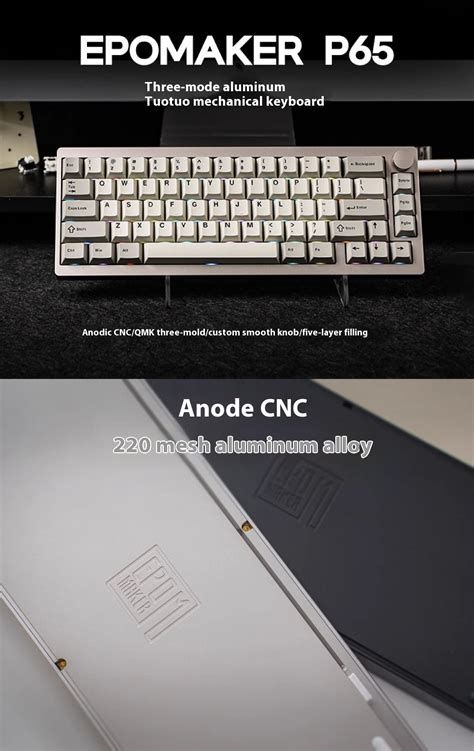
The Epomaker P65 arrives as a fairly typical enthusiast board package: the keyboard, a detachable USB cable, a few extra keycaps, and basic documentation. The build felt solid out of the box — weighty enough to stay put on a desk without being so heavy that carrying it is cumbersome. The smaller footprint immediately frees up desk space, and the included keycap set provides a satisfactory initial typing surface. For a buyer, these first impressions often matter more than minor spec differences: a keyboard that looks and feels complete from the start reduces initial friction in adopting it.
Typing Experience and Switches
The defining element of any mechanical keyboard experience is the switches. The P65 is commonly available with hot-swappable MX-style switch sockets, which means users can try different mechanical switch types (linear, tactile, clicky) without soldering. That flexibility is valuable for people experimenting with what suits their typing style best.
On a daily basis, the P65’s smaller layout changes the reach and muscle memory slightly. The compactness is liberating for posture and desk ergonomics — the mouse sits closer to the board — but it requires a short adjustment period. Arrow keys and a small cluster of navigation keys mean the author did not lose common editing and navigation workflows, unlike on some 60% boards that rely heavily on layers.
Stabilizers on the larger keys felt adequate, though enthusiasts will note that keyboard stabilizers almost always benefit from light tuning (lubing, clipping) for a cleaner sound and feel. The stock sound profile is slightly snappy; adding foam or swapping to different switches will change the tone and dampening characteristics significantly.
Connectivity, Battery, and Daily Reliability
For many buyers, wireless reliability is a make-or-break factor. The P65 offers multiple connection modes (USB wired and at least one wireless option), which covers the needs of people who switch between desks and travel. Real-world use revealed stable connections for typical office and café distances. Battery life varied with usage patterns: light office work with backlighting off lasted multiple days between charges, while heavy use with bright backlight settings reduced runtime predictably. This mirrors the common trade-off on modern wireless mechanical boards — brighter, constant lighting costs battery life.
Wired connection is straightforward and convenient for long gaming sessions or when charging while using the keyboard. The detachable cable also makes the P65 more portable and travel-friendly than integrated-cable full-size boards.
Software, Customization, and Layers
Customization matters more to mechanical keyboard buyers than to consumers of standard membrane boards. The Epomaker ecosystem typically supports remapping keys, creating layers, and customizing backlight effects through dedicated software or firmware interfaces. Those who need macro programming and easy layer switching will find value here.
Find top-rated Laptops & Computers products at great prices.
Browse Now →That said, software on some smaller brands can vary in polish compared to mainstream players. The typical experience is functional: remapping works, lighting modes are adjustable, and firmware updates are possible. Power users who want deep QMK or VIA-style programmability should check the specific P65 variant before buying; some models offer open-source firmware support, while others use vendor software.
Real-World Use Cases
The P65 performs well across several practical scenarios:
- Programming and Writing: The compact layout reduces hand travel and keeps the mouse in a comfortable range, which can reduce fatigue during long sessions. Arrow keys and a dedicated delete/home cluster improve editing speed compared to 60% boards that hide these keys behind layers.
- Remote and Hybrid Work: Portability and wireless connectivity are valuable for users who move between home and office. The detachable cable and small case allow easy packing into a backpack.
- Light to Moderate Gaming: The P65’s layout preserves arrow keys and other commonly used gaming keys while keeping the footprint small. Wired mode is available for lower-latency sessions.
- Content Creation: Many creators appreciate the tactile feedback for repetitive tasks, though heavy macro users should verify the firmware’s macro capabilities beforehand.
Maintenance and Long-Term Considerations
Mechanical keyboards are modular by nature. The P65’s hot-swap capability simplifies upgrades and maintenance: switching to a new set of switches or replacing a faulty switch is a simple, solder-free task. Keycap upgrades are similarly straightforward, allowing users to tailor the texture, profile, and aesthetic to their preferences.
Over months of use, the author found simple upkeep routines (regular keycap cleaning, occasional stabilizer lubing) kept the board in excellent condition. As wi…
Pros & Cons
Pros
- Compact 65% layout keeps arrow and navigation keys while saving desk space
- Hot-swappable MX-style switch sockets enable easy switch experimentation
- Multiple connection modes (wired and wireless) increase flexibility for hybrid workflows
- Detachable cable improves portability and reduces desk clutter
- Customizable lighting and key mapping give users control over functionality and aesthetics
Cons
- Smaller footprint requires a short adjustment period for muscle memory
- Out-of-the-box stabilizers and sound may benefit from tuning for a cleaner feel
- Software polish and feature set may vary by variant — check firmware compatibility if advanced programmability is required
- Battery life is affected by lighting and wireless use, so heavy lighting users should expect more frequent charging
Comparison: Epomaker P65 vs. Comparable Compact Boards
| Feature | Epomaker P65 | Keychron K6 (example) | Anne Pro 2 (example) |
|---|---|---|---|
| Layout | 65% with dedicated arrow keys and a small nav cluster | 65% compact layout | 60% compact layout (no dedicated arrow cluster) |
| Hot-Swap | Often offered with hot-swap MX sockets | Available on many versions | Some versions support hot-swap |
| Wireless | Wired + wireless modes (varies by model) | Wired + Bluetooth | Primarily wireless (Bluetooth) |
| Programmability | Vendor software / firmware options; check variant for QMK/VIA support | Vendor software and some QMK support on select models | Good community support and software for remapping |
| Target Buyer | Users who want a compact board with arrow keys and customization | Users seeking a budget-friendly 65% with wireless | Users preferring a minimalist 60% with strong wireless focus |
The table is not exhaustive but highlights practical differences buyers often consider: layout choices (65% vs 60%), hot-swap availability, wireless options, and programmability. Those comparisons help clarify whether a compact 65% like the P65 is a better match than popular alternatives.
Buying Guide: What to Look for Before Choosing the P65
When evaluating the Epomaker P65 (or any 65% compact keyboard), buyers should consider the following factors to ensure the keyboard matches their needs.
1. Layout and Ergonomics
Confirm the layout actually suits your workflow. The P65 retains arrow keys and a small nav cluster, which is often more comfortable for editing tasks than a 60% layout that hides those keys behind layers. If you frequently use a numpad, a compact board may not be the right choice.
2. Switch Options and Hot-Swap
If the keyboard supports hot-swappable MX-style switches, it allows trying different switch types without soldering. Consider which switch type you prefer (linear for smooth keystrokes, tactile for feedback, clicky for audible confirmation) and whether the vendor offers pre-built variants with your preferred option.
3. Build Material and Mount Type
Pay attention to case material (ABS, plastic, aluminum) and plate composition (aluminum, polycarbonate, brass). These affect weight, rigidity, and sound. Mount style (tray, gasket, top mount) influences typing feel; gasket-mounted designs often feel softer and more insulated, while rigid plates can feel snappier.
Looking for the best Laptops & Computers deals on Amazon?
See Deals →4. Wireless Mode and Battery Life
If portability is important, confirm the wireless modes available and realistic battery life under typical use. Consider whether you need multi-device pairing, the convenience of low-latency 2.4 GHz mode for gaming, or simply stable Bluetooth for typing on the go.
5. Software and Firmware Support
Look for clear information on remapping, macro programming, and firmware updates. For power users, open-source firmware compatibility (QMK/VIA) makes deep customization easier and ensures longevity through community support.
6. Keycaps and Aesthetics
Stock keycap material influences texture and durability. PBT keycaps resist shine and are generally preferred over ABS for long-term use. Check whether the keyboard supports common keycap profiles (e.g., Cherry, OEM) so aftermarket keycaps will fit without issues.
7. Community and Support
Smaller brands sometimes have active communities and fan-made guides; this can be helpful for modding and troubleshooting. Look at forums and reviews to gauge how responsive vendor support is for firmware and warranty questions.
Practical Tips for New Owners
- Spend time with the layout. The 65% layout usually requires only a short adaptation period but wilful practice helps — try doing a few editing tasks to build new muscle memory.
- Consider tuning stabilizers if larger keys feel or sound off. Light lubing and clipping are common aftermarket fixes for improved feel.
- If the keyboard is hot-swap, experiment with switches before committing to a full set. Test different weights and types to find what reduces fatigue for long typing sessions.
- Try the vendor software to set up layers that mirror your old workflow (e.g., remap keys you used frequently on your laptop keyboard).
- Protect the keyboard during travel with a simple sleeve or padded case to avoid scuffs and keep the detachable cable safe.
Conclusion
The Epomaker P65 makes a persuasive case for anyone interested in a compact, capable mechanical keyboard that preserves essential navigation keys without occupying the space of larger boards. In everyday use — writing, coding, remote work, light gaming — the P65 delivers a more comfortable and efficient experience than typical laptop keyboards, with the added benefit of customization that matches different typing preferences.
There are trade-offs: adopting a smaller footprint takes a brief adjustment; the stock sound and stabilizer tuning may not satisfy every enthusiast without minor mods; and wireless battery life is affected by backlighting and usage patterns. However, the board’s hot-swap flexibility, compact ergonomics, and multi-mode connectivity make it a strong option for buyers who want an upgrade on both desk real estate and typing feel while retaining practical navigation keys.
Ultimately, the P65 is best for users who value a compact layout with arrow keys, want to experiment with switches, and appreciate the portability and customization of a modern mechanical keyboard. For those criteria, the author found the switch to the Epomaker P65 worthwhile and recommends evaluating the board against the buying guide elements above to ensure it matches individual needs.