Biggest Peckperk Smart Bird Feeder Camera Buying Mistakes (And How to Avoid Them)
Birdwatching has evolved from a patient, binocular-focused hobby into a high-tech immersive experience. With the introduction of smart bird feeders, enthusiasts can now witness every feather detail, beak shape, and social hierarchy interaction from the palm of their hand. The Peckperk Smart Bird Feeder Camera has emerged as a popular choice in the Cameras category, offering a bridge between traditional avian care and modern digital surveillance. However, as with any specialized piece of technology, purchasing one is not as simple as picking a traditional wooden feeder off a shelf. Many buyers find themselves frustrated by connectivity issues, poor battery performance, or inadequate AI identification because they ignored critical technical requirements during the shopping phase.
Identifying the right camera for your backyard ecosystem involves understanding not just the birds, but the physics of wireless signals, the durability of outdoor materials, and the nuances of high-definition video capture. This guide explores the most frequent pitfalls consumers face when investing in the Peckperk ecosystem and provides a comprehensive analysis of the hardware to ensure your transition into smart birding is seamless and rewarding. Avoiding these mistakes will save you time, money, and the disappointment of missing that rare migratory visitor because your equipment wasn't properly configured for the job.
Analysis of the Peckperk Smart Bird Feeder Camera
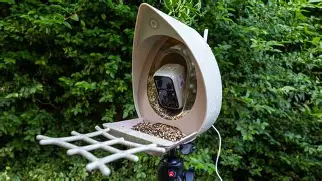
The Peckperk Smart Bird Feeder Camera is an integrated system designed to withstand the rigors of outdoor placement while delivering crisp 1080p video. Unlike generic outdoor security cameras that are often repurposed for birdwatching, the Peckperk is built with the geometry of avian anatomy in mind. Its proximity to the perch allows for a wide-angle view that captures birds as they land, feed, and depart, often triggering automatic recording sessions based on motion sensing. The unit typically features a weather-resistant housing, an integrated hopper for various seed types, and a solar-powered charging integration to minimize manual maintenance.
One of the core strengths of the camera is its high-dynamic range (HDR) sensor. Backyard lighting is notoriously difficult to manage; shadows from trees can create dark spots while bright midday sun can wash out the vibrant colors of a Cardinal or Blue Jay. The Peckperk optics are tuned to balance these extremes, ensuring that the plumage is visible even when the environment is harshly backlit. Furthermore, the inclusion of a high-sensitivity microphone allows birders to hear the distinct vocalizations and clicks of different species, which is often a missing component in lower-end camera models.
However, the software side of the experience is where the Peckperk truly seeks to differentiate itself. The companion application utilizes machine learning algorithms to identify species in real-time. When a bird lands on the tray, the camera captures an image and compares it to a vast database of North American and global species. A message is then pushed to the user’s smartphone, often identifying the visitor by name. While impressive, this feature relys heavily on the quality of the local Wi-Fi connection and the positioning of the feeder, which leads us to the critical mistakes many new owners make.
Pros and Cons of the Peckperk System
- Pro: Integrated Solar Power – The included solar panel significantly extends battery life, often eliminating the need to take the feeder down for charging during peak sunny months.
- Pro: High-Definition Clarity – The 1080p resolution provides enough detail to distinguish subtle markings on smaller songbirds like finches and chickadees.
- Pro: Two-Way Audio – While primarily a passive observation tool, the ability to hear bird calls adds an auditory dimension that enhances the hobby.
- Pro: Durable Construction – The use of UV-resistant plastics and IP65-rated waterproofing ensures the electronics survive rain, snow, and intense heat.
- Con: Wi-Fi Dependency – Like most smart devices, its AI features and live streaming require a strong, stable 2.4GHz signal, which can be difficult to maintain in large backyards.
- Con: Maintenance Requirements – The camera lens must be kept clean of seed dust and bird droppings to maintain image quality, necessitating periodic manual intervention.
- Con: Storage Costs – While many models offer local SD card storage, the most advanced AI features and cloud playback historical data often require a subscription service.
Mistake 1: Ignoring the 2.4GHz vs. 5GHz Wi-Fi Limitation
The most common technical failure reported by buyers of the Peckperk Smart Bird Feeder Camera isn't a hardware defect, but a misunderstanding of networking standards. Most modern home routers are "dual-band," emitting signals at both 2.4GHz and 5GHz. The Peckperk camera, like the vast majority of outdoor IoT (Internet of Things) devices, is designed to operate exclusively on the 2.4GHz band. This is because 2.4GHz signals have a longer wavelength, allowing them to penetrate exterior walls and travel further into a backyard compared to the faster but shorter-range 5GHz signal.
Many users attempt to set up the feeder using a smartphone that is currently connected to the 5GHz band. This often leads to a "Device Not Found" error or a failure during the handshake process. Additionally, if your router uses "Smart Steering" (giving both bands the same name), the camera may struggle to lock onto the correct frequency. To avoid this mistake, ensure your router has a dedicated 2.4GHz SSID or temporarily disable the 5GHz band during the initial setup. Testing the signal strength at the specific location where you intend to mount the feeder is also vital. A "three-bar" signal indoors often becomes a dead zone once you go through brick, insulation, and glass.
Mistake 2: Poor Placement Relative to Lighting and Behavior
A camera is only as good as the light hitting its subject. A frequent error is mounting the Peckperk feeder facing directly into the morning or evening sun. This creates a silhouette effect where the bird appears as a black shadow against a blinding white background, rendering the AI identification features useless. The ideal placement is one where the sun remains behind the camera for the majority of the day, or in a location with filtered, ambient light.
Furthermore, buyers often forget to consider the "flight path" of the birds. If the feeder is placed in the middle of a wide-open lawn, many smaller birds will feel too vulnerable to predators to visit regularly. By placing the feeder within 10 to 15 feet of cover (like a bush or tree), you provide a staging area where birds can observe the feeder before landing. This leads to more frequent visits and more "calm" footage, as the birds spend more time feeding and less time scanning the sky in a panic. However, placing it too close to a tree branch may invite squirrels to leap onto the device, which can lead to tilted cameras or physical damage.
Mistake 3: Underestimating the Impact of Squirrels
No discussion of bird feeders is complete without mentioning squirrels. While the Peckperk Smart Bird Feeder is robust, it is not indestructible. A common mistake is mounting the feeder on a deck railing or a tree trunk without a baffle. Squirrels are remarkably heavy and agile; their constant jumping and hanging can knock the camera out of alignment or scratch the lens cover with their claws. More importantly, squirrels will trigger the motion sensors relentlessly, filling your app with hundreds of notifications for "non-bird" activity, which can drain the battery and clog your storage.
Find top-rated Cameras & Photography products at great prices.
See Deals →To avoid this, use a dedicated pole mount with a squirrel baffle located at least ten feet away from any jumping-off points. Some owners also fail to utilize the software's "Activity Zones." The Peckperk app allows you to mask out certain areas of the frame. By masking the edges where squirrels might be climbing, you can reduce false alerts and focus the motion trigger solely on the landing perch.
Technical Comparison: Peckperk vs. Competitor Categories
When shopping in the smart camera category, it is helpful to see how specialized bird cameras like the Peckperk stack up against standard outdoor security cameras and entry-level "action" cameras often strapped to feeders.
| Feature | Peckperk Smart Feeder | Standard Outdoor Security Cam | Generic Action Cam (DIY) |
|---|---|---|---|
| AI Species ID | Built-in database (often 6,000+ species) | General "Animal" detection only | None (Manual review required) |
| Focus Distance | Optimized for 2–10 inches | Fixed focus (usually 3ft to infinity) | Varies; often blurry at close range |
| Power Source | Integrated Solar / Internal Battery | Hardwired or Battery (No hopper sync) | Internal Battery (Short life) |
| Notification Type | "A Northern Cardinal is visiting!" | "Motion detected in Backyard" | None |
| Weatherproofing | Fully integrated IP65 housing | IP65 to IP67 | Requires external waterproof case |
Mistake 4: neglecting the SD Card and Cloud Storage Strategy
Modern smart cameras generate a significant amount of data. A 1080p video clip lasting 20 seconds can be several megabytes. If your backyard is high-traffic, you could see 50 to 100 clips a day. A major mistake buyers make is assuming the device comes with everything needed to store years of memories. Many Peckperk models require a microSD card (usually Class 10 or higher) which must be purchased separately. Failing to install one means you might only be able to view live streams, missing the "action" that happens while you are away.
Additionally, understand the limitations of cloud storage. While the Peckperk often offers a trial of its AI identification and cloud backup service, these typically transition to a paid model. If you are averse to monthly fees, you must ensure you have a large enough local SD card (at least 64GB or 128GB) and check if the species identification remains functional without the cloud subscription. Some "smart" features are processed on remote servers, meaning the camera is significantly less "intelligent" if it cannot talk to the manufacturer’s cloud.
Mistake 5: Failing to Seasonally Adjust Maintenance
Buyers often view the Peckperk as a "set it and forget it" device. Over time, the camera lens will…Battery maintenance is also a seasonal concern. While solar panels are excellent, their efficiency drops significantly in winter due to shorter days and the lower angle of the sun. If you live in a northern climate, a common mistake is not checking the battery levels in January. You may need to bring the unit inside once a season for a full Wall-plug charge to "top off" the cells and ensure the chemicals remain healthy during deep freezes.
Buying Guide: How to Choose the Right Smart Feeder Camera
If you are currently in the market for a Peckperk or a similar device, follow this checklist to ensure you are making a valid investment for your specific environment.
1. Assess Your Wireless Environment
Walk to the spot where you want the feeder. Hold your phone and try to stream a YouTube video in 1080p. If it buffers or drops to low resolution, your Peckperk will likely struggle. Consider a Wi-Fi extender or a mesh network system with an outdoor-rated node to bridge the gap between your house and the garden.
2. Evaluate the Housing Material
Look for high-density, UV-stabilized plastics. Bird feeders exist in the most punishing environment possible—constant sun exposure. Cheaper plastics will become brittle and crack within two seasons. The Peckperk is generally well-regarded for its material thickness, but always verify the specific model's weather rating.
Find top-rated Cameras & Photography products at great prices.
View Offers →3. Check the AI Database Breadth
Different cameras use different software providers. Ensure the database covers the birds in your specific region. Some global models are excellent at identifying European species but struggle with North American regional variations of wood-warblers or sparrows. Look for units that allow for user-submitted corrections to help "train" the AI for your local visitors.
4. Verify Power Resilience
Does the solar panel have a detachable cord? This is a hidden benefit. If your feeder must be in a shady spot under an eave for the birds' safety, you want a solar panel that can be mounted 5–10 feet away in the direct sun. A fixed panel on top of the feeder is only useful if the feeder itself is in a sunny location.
5. Read the App Reviews, Not Just the Hardware Specs
The hardware is only 50% of the product. The app is how you will interact with the birds every day. Search for the app in the Google Play or Apple App Store and read recent reviews regarding connectivity and notification lag. A beautiful camera with a crashing app is a frustrating experience.
Real-World Use Cases: What to Expect
To truly understand the value of the Peckperk, consider the use case of a "Citizen Scientist." Many backyard birders use these cameras to track migratory dates. By having a digital record of when the first Rose-breasted Grosbeak arrives each spring, users can contribute to local birding databases or simply enjoy the personal satisfaction of watching the seasons change. The camera allows for the observation of "unseen" behaviors, such as nocturnal visitors. It is not uncommon for owners to check their footage in the morning and find that a raccoon, opossum, or even a flying squirrel visited the feeder under the cover of darkness.
Another use case is for those with limited mobility. For individuals who cannot easily hike through woods or spend hours sitting in a cold bird blind, the smart feeder brings the nature to them. The high-definition "eye-to-eye" perspective provides a level of intimacy with wildlife that was previously reserved for professional National Geographic cinematographers with telephoto lenses worth thousands of dollars. The Peckperk democratizes this view, making it accessible to anyone with a garden and a smartphone.
The Ethics of Smart Birding
When purchasing a camera-equipped feeder, buyers must also consider the welfare of the birds. A common mistake is prioritizing the "perfect shot" over avian safety. This includes using "predator calls" via the two-way audio to attract birds, which can cause significant stress. It also includes the duty of care regarding the "Window Strike" phenomenon. When placing your Peckperk feeder, ensure it is either very close to the window (within 3 feet) or more than 30 feet away. The "danger zone" in between is where birds are most likely to fly into the glass when startled from the feeder, as they have enough distance to gain speed but not enough to realize the reflection isn't open sky.
Additionally, be mindful of the "digital footprint" of your hobby. Some apps allow you to share your "Public Stream." While it is fun to show off your visitors, be careful not to reveal identifiable landmarks of your home or neighborhood that could compromise your privacy or the location of rare nesting sites that may be nearby.
Conclusion
The Peckperk Smart Bird Feeder Camera is a powerful tool that transforms the way we interact with the natural world. By avoiding the fundamental mistakes of poor Wi-Fi planning, incorrect lighting placement, and neglecting long-term storage needs, you can ensure that your device remains a source of joy rather than a technical chore. Understanding the synergy between the physical hardware and the digital AI software is the key to unlocking the full potential of this camera category. As you set up your station, remember that the goal is not just to capture a picture, but to foster a healthy, safe, and observable environment for the birds that grace your backyard. With the right preparation, the Peckperk offers a front-row seat to the intricate and beautiful lives of our feathered neighbors, providing a constant stream of discovery that enriches the birdwatching experience for years to come.